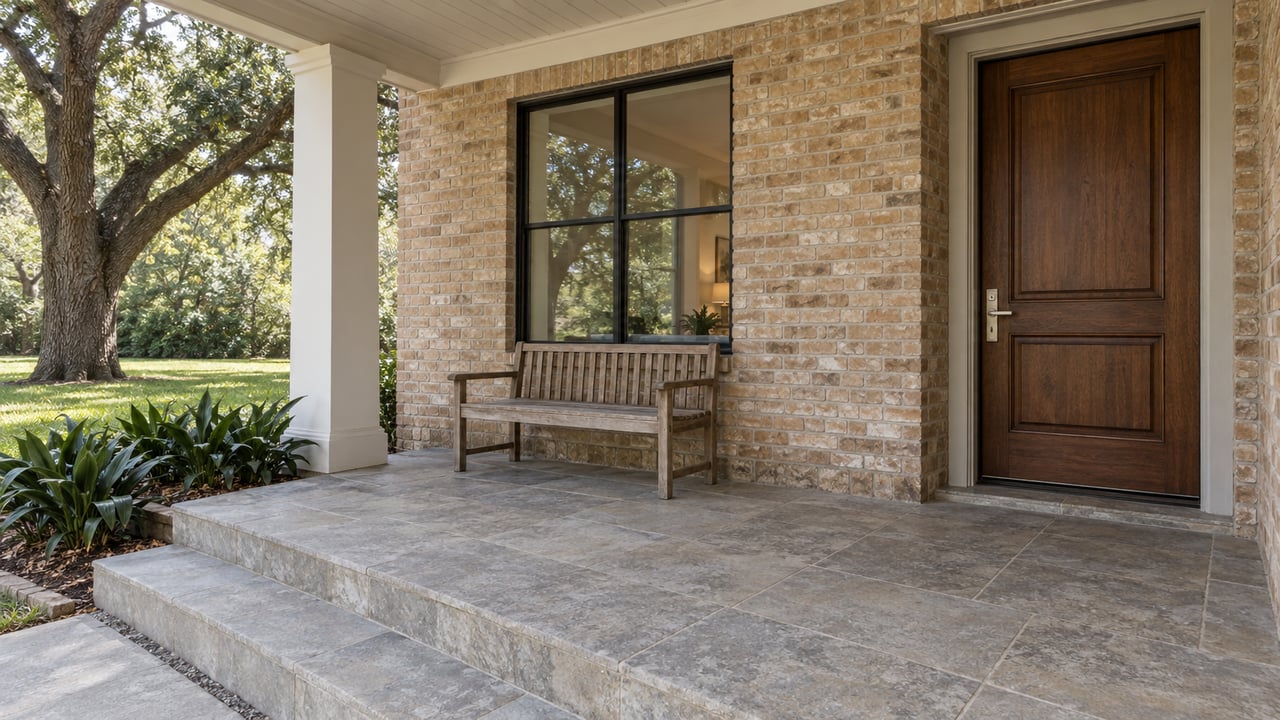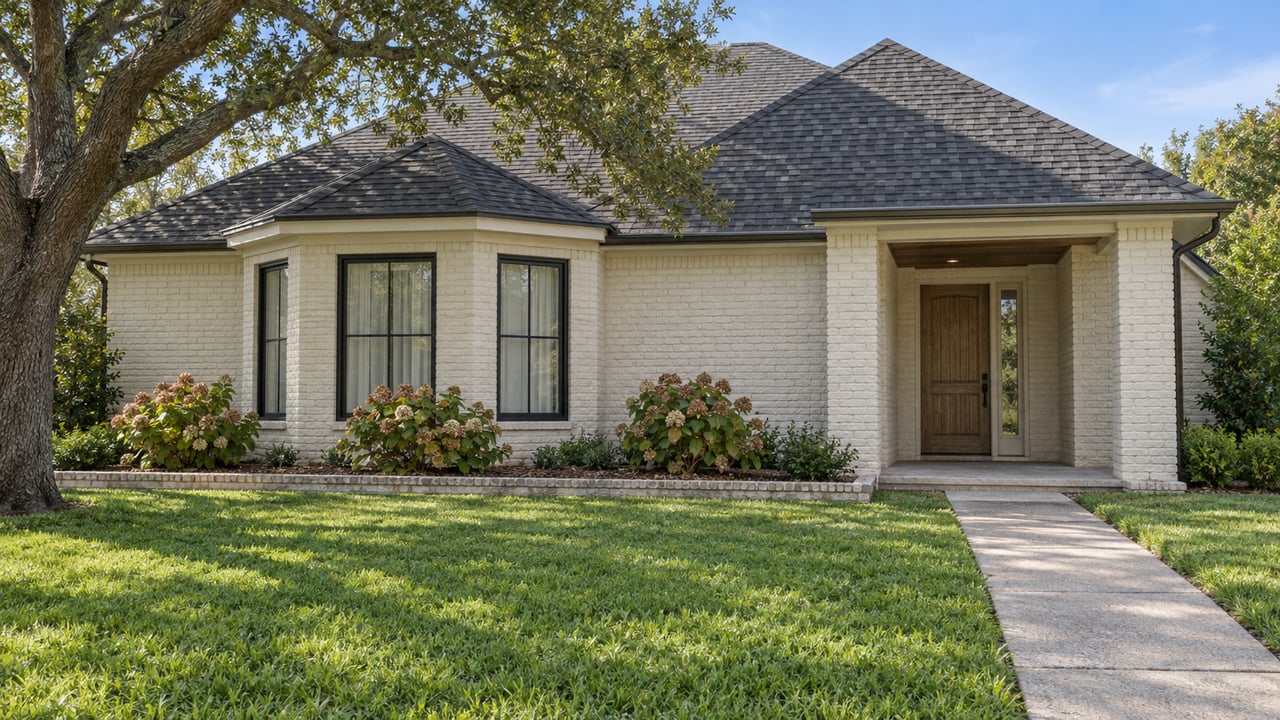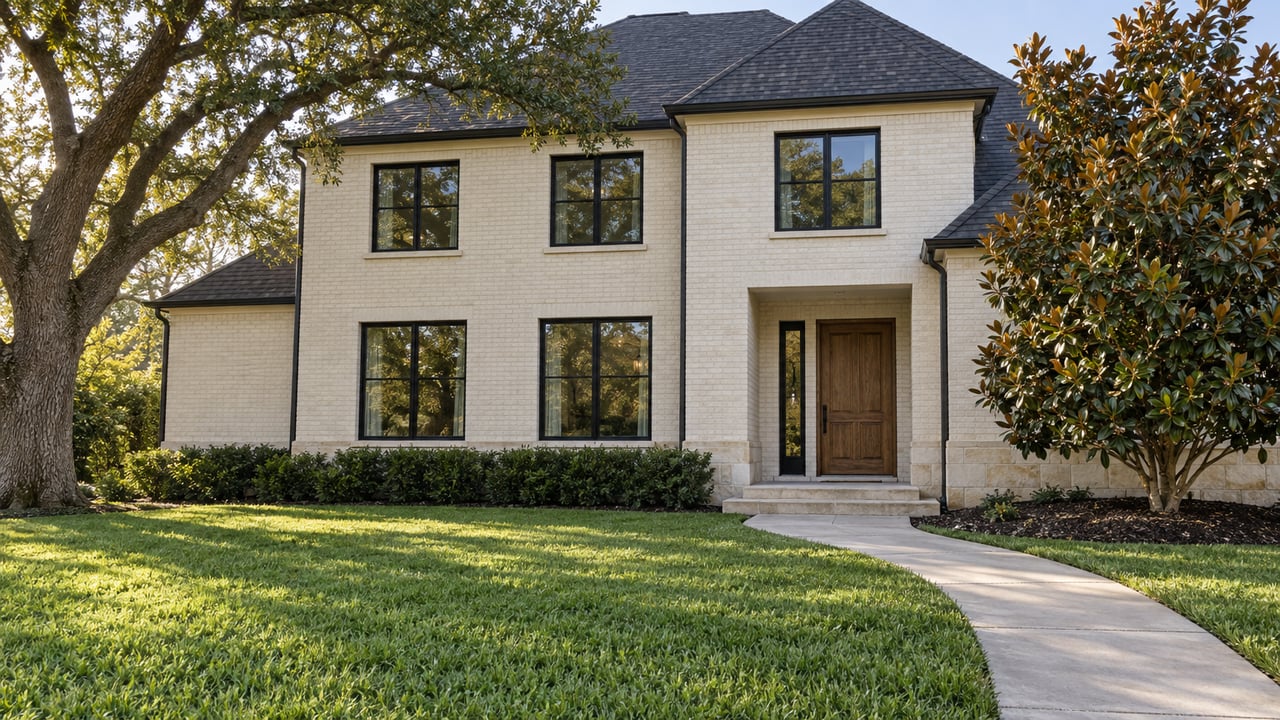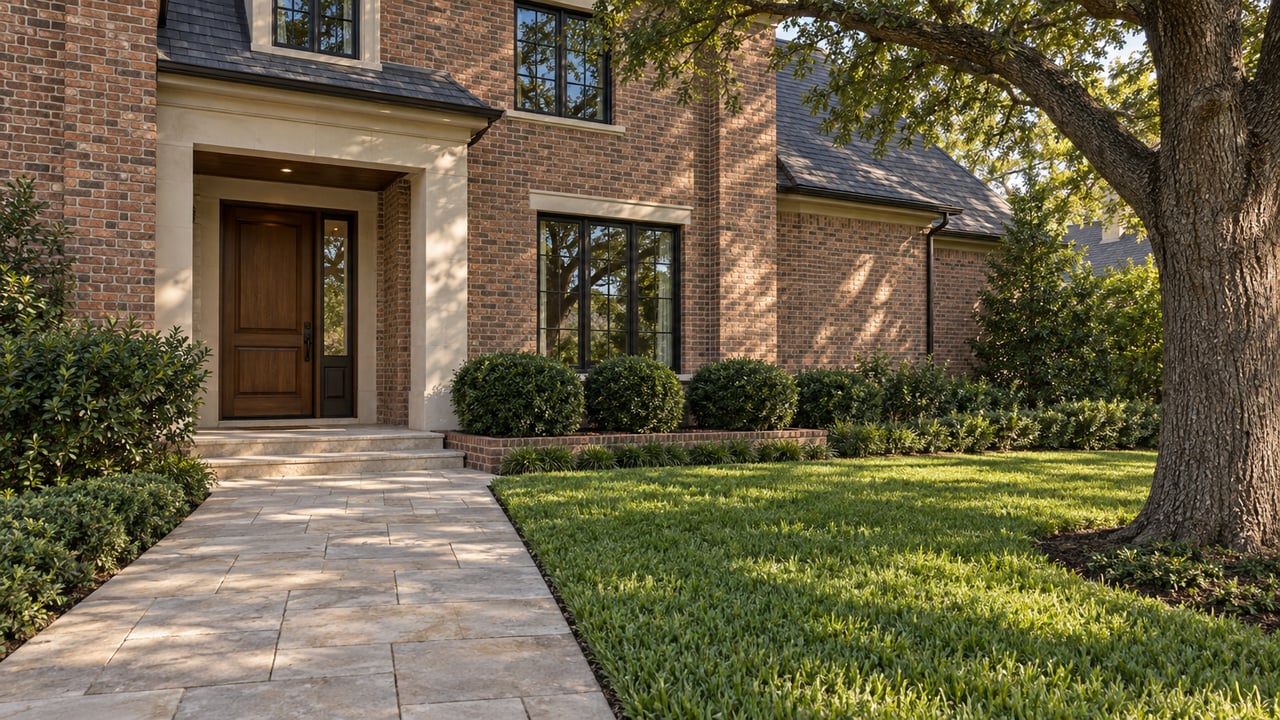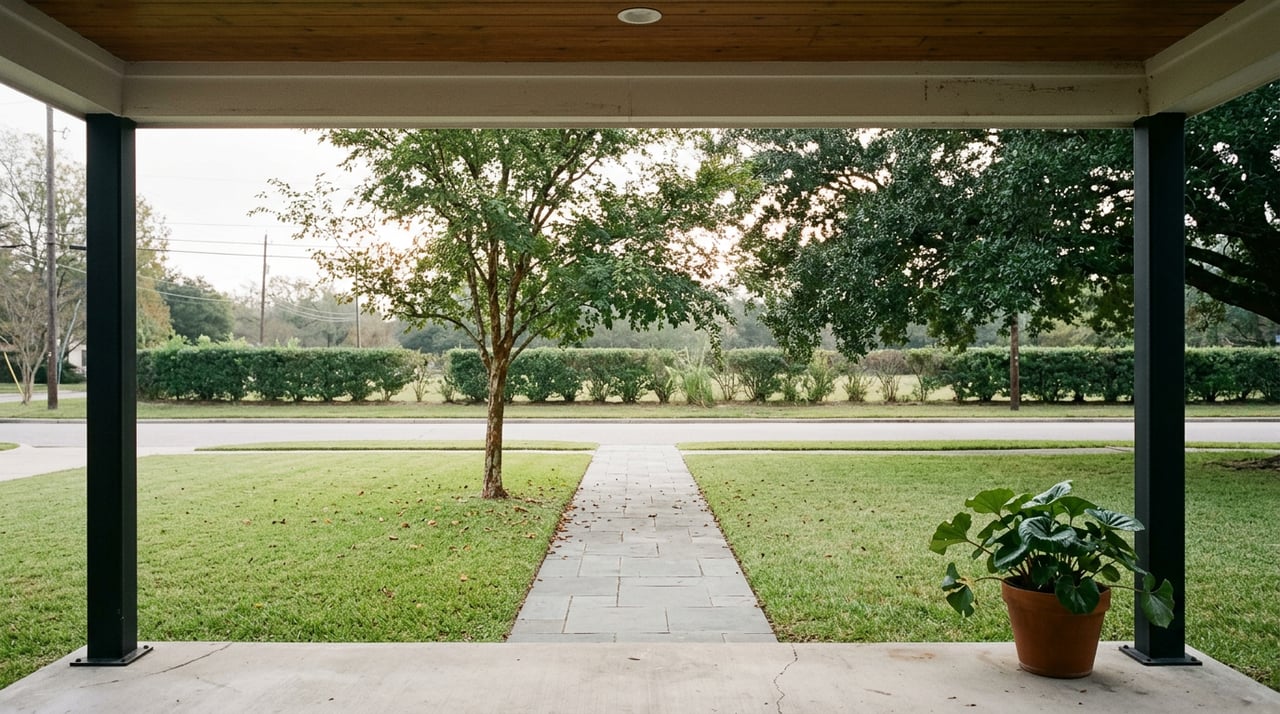
In July 2026, a 4,854 square foot home built by Wood Custom Homes closed at 4902 Oak Forest Dr, a 12,000 square foot corner lot across the street from Candlelight Park. It had listed at $1,949,000. A few streets over, a 1950s ranch on a similarly sized lot can still trade for less than a third of that figure, updated kitchen and all. Both sales count toward the same "Oak Forest median" that shows up when you search the neighborhood. That single number is doing a lot of work it isn't built to do.
If you've been comparing Oak Forest to other Houston neighborhoods and noticed the median price seems to move a strange amount depending on which site you check or which week you check it, you're not misreading anything. You're looking at a market that's actually two markets, filed under one name.
Why the Lot Next Door Can't Become Two Lots
Start with the rule that shapes everything else here. Oak Forest's deed restrictions, recorded decade by decade as the neighborhood built out after World War II, prohibit subdividing single-family lots. Duplexes and multi-family construction aren't permitted. Builders are also discouraged from putting up identical homes block by block. Enforcement runs through section civic clubs under the Oak Forest Homeowners Association, a voluntary group with $40 annual dues, but the deed restrictions themselves apply whether or not a given owner ever joins. Plans that skip review by the Architectural Review Committee before City of Houston permitting can be red-tagged with a stop-work order.
That rule matters more than it sounds like it should. In a neighborhood where subdivision isn't on the table, a builder who buys an original ranch on a 10,000 or 12,000 square foot lot can't split the parcel and put up two modest spec homes to spread the land cost across two buyers. The only play is one home, on the full lot, priced to absorb the land basis alone. That's a structural reason the new construction you're seeing in Oak Forest skews toward the $1M to $2M range rather than the smaller-footprint infill common in neighborhoods where lot splits are allowed.
What the Reported Median Doesn't Tell You
Here's where it gets confusing if you're just scanning portals. Depending on the source and the exact window measured, Oak Forest's reported median has shown up as:
| Time window | Reported median |
|---|---|
| January 2026, Oak Forest only (63 closings) | $920,000 |
| Trailing 3 months through May 2026, Oak Forest-Garden Oaks combined | $573,000 |
| January 2026, Oak Forest-Garden Oaks combined | $519,500 |
| July 17, 2026 snapshot, active Oak Forest listings | $799,000 median list price |
| April 2026 update, Oak Forest standalone per a local market guide | $724,500 |
That's not sloppy data. It's what happens when the underlying sales count is thin. Oak Forest alone was selling somewhere around 55 to 65 homes a month across the periods reflected above, a small enough sample that a couple of luxury new-construction closings landing inside or outside a given month can swing the reported median by hundreds of thousands of dollars. That's very likely what happened between January 2026, when only 63 homes closed and the median jumped to $920,000, and the trailing three-month figure through May 2026, which settled back to $573,000 once the mix normalized. Days on market told a similar story: 85 days in January 2026 against 54 the year before, versus a steadier 36 days across the combined Oak Forest-Garden Oaks area through May.
None of these numbers are wrong. They're each measuring whatever happened to close in that particular slice of time, in a market where the housing stock itself splits into two very different products.
Two Markets, Same Streets
Oak Forest was developed starting in 1947 as one of Houston's first postwar subdivisions, built at scale and marketed heavily to returning veterans. That history is why so much of the original stock reads the same way: 1940s to 1960s ranch construction on generous lots, most in the 7,000 to 12,000 square foot range. For decades that was simply what Oak Forest was.
The teardown and new-construction wave layering on top of that stock is concentrated along corridors like TC Jester and Pinemont, where lot premiums have pulled in builders. CitySide Homes is behind Reserve at Oak Forest, a 23-home enclave of three-story houses. Harvard Homes has a 4,300 square foot custom build underway in the neighborhood. Jamestown Estate Homes builds on client-owned lots here as well, on top of the Wood Custom Homes project already mentioned. Each of these is producing a home that competes in an entirely different price tier than the original ranch next door, even though both sit inside the same section boundaries and the same civic club jurisdiction.
Given how far apart the raw dollar medians land, price per square foot turns out to be the steadier comparison. The trailing three-month figure through May 2026 for the combined Oak Forest-Garden Oaks area came in at $319 per square foot, up 19 percent year over year. The July 17, 2026 snapshot of active Oak Forest listings showed an average of $330.30 per square foot. Those two numbers, pulled from different scopes and different moments, land close together in a way the headline medians never do. That gap between how stable the per-square-foot figure stays and how volatile the median swings is itself the clearest evidence that Oak Forest's median is a blend of two products, not a read on one market.
What This Means If You're Comparing Oak Forest to Somewhere Else
If you're weighing Oak Forest against another Houston neighborhood, the headline median isn't the number to anchor on. A few better questions to bring to any comparison:
- Which segment is the quoted median actually built from: original homes, new custom construction, or a blend of both?
- What does price per square foot look like for homes of a similar vintage and finish level, rather than for the neighborhood as a whole?
- If you're buying an older home with an eye toward a future rebuild, remember the deed restrictions mean one new home per lot, not two. That changes the return math compared to a market where subdivision is permitted.
- Is the figure you're looking at a monthly snapshot or a trailing average? A single month's median in a low-volume market can be pulled hard by one or two closings at either end of the price range.
None of this means Oak Forest is unpredictable. It means the neighborhood is genuinely two overlapping markets, original ranch homes and new custom construction, both governed by the same deed restrictions and both selling on the same streets, and any comparison that treats the median as a single number will miss what's actually driving it.
FAQ
Can I subdivide a large Oak Forest lot into two smaller building sites? No. Oak Forest's deed restrictions prohibit subdividing single-family lots, and duplex or multi-family construction isn't permitted under the restrictions enforced by the section civic clubs.
Is there one HOA that covers all of Oak Forest? The Oak Forest Homeowners Association is a voluntary civic group, not a mandatory HOA, and dues are optional. Deed restrictions are enforced section by section through individual civic clubs regardless of OFHA membership.
Why does the median price for Oak Forest look so different depending on where I check? Different sources measure different time windows, some combine Oak Forest with Garden Oaks and some don't, and monthly sales volume is low enough that a handful of luxury new-construction closings can shift the reported median substantially from one period to the next.
If you're trying to figure out which version of Oak Forest actually fits your budget and your plans, whether that means an original ranch with renovation potential, a custom new build, or a lot purchase, a conversation grounded in the right comparisons is worth more than another portal search. Austin Oztan works with buyers across Houston's inner-loop and west-side neighborhoods on exactly this kind of segmented, financially grounded evaluation. Schedule a Consultation to talk through what you're actually comparing before you compare it.
This article is general information, not legal, tax or financial advice. Consult a qualified professional about your situation.