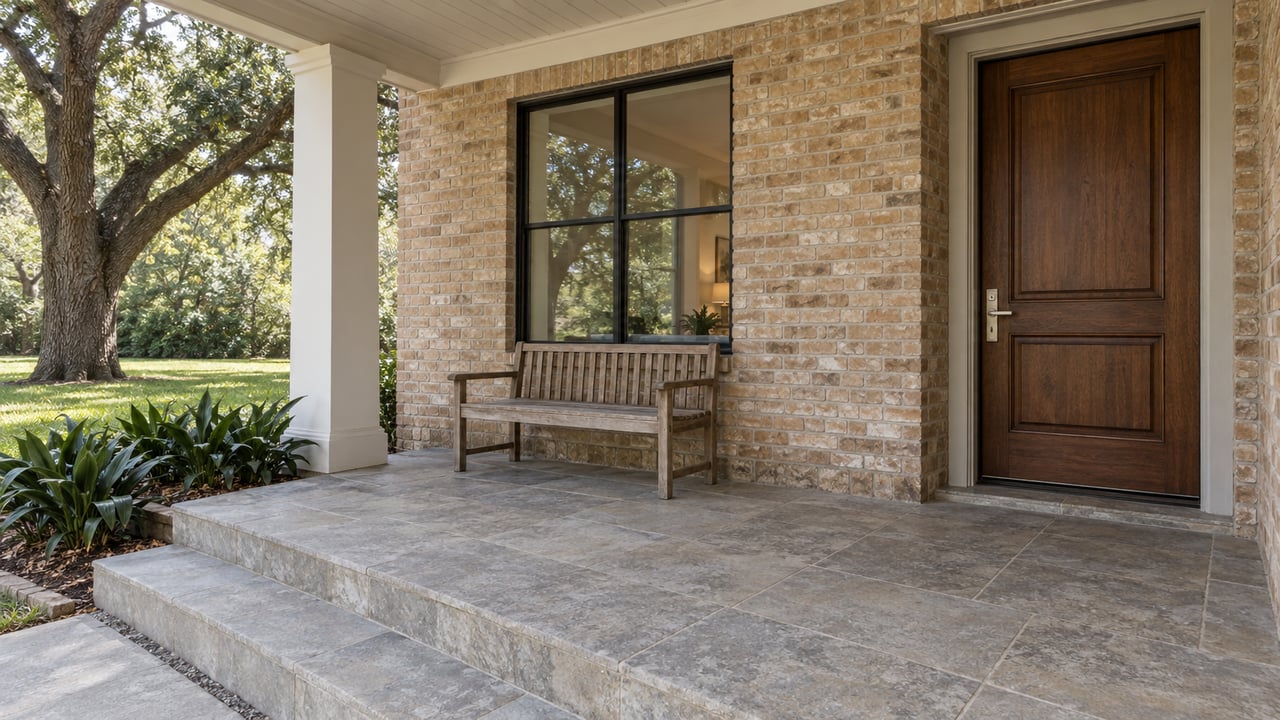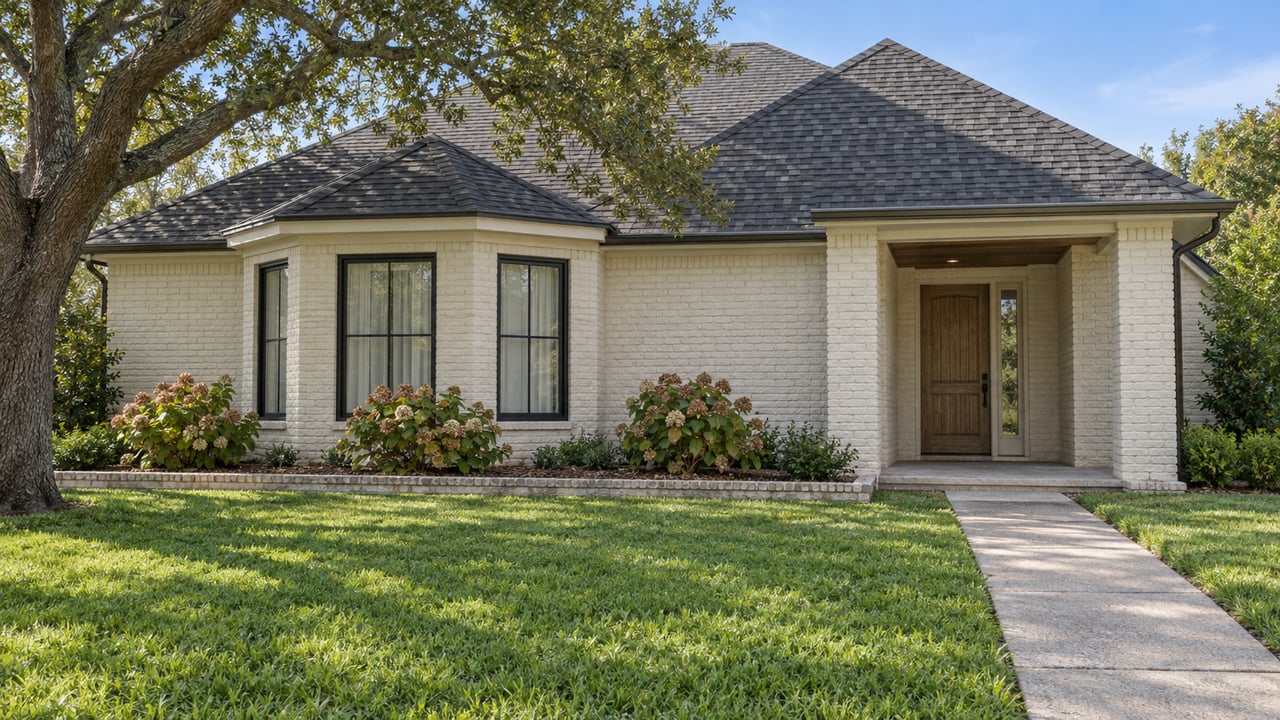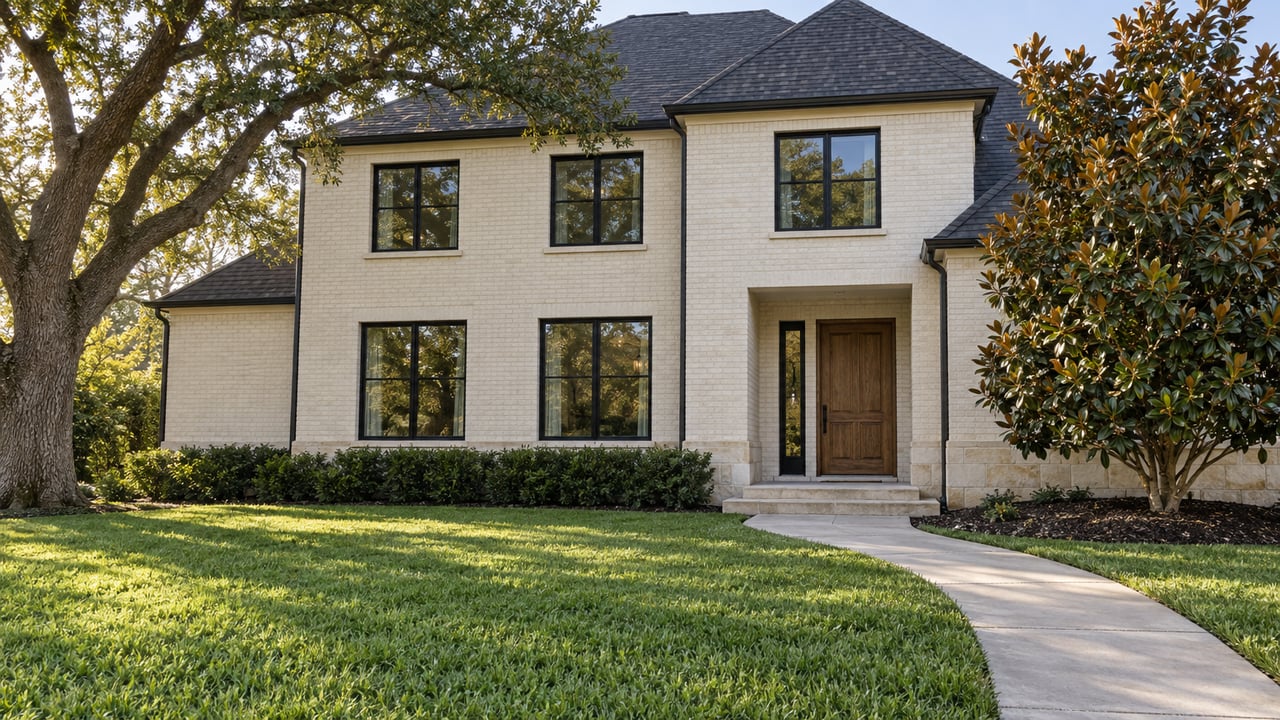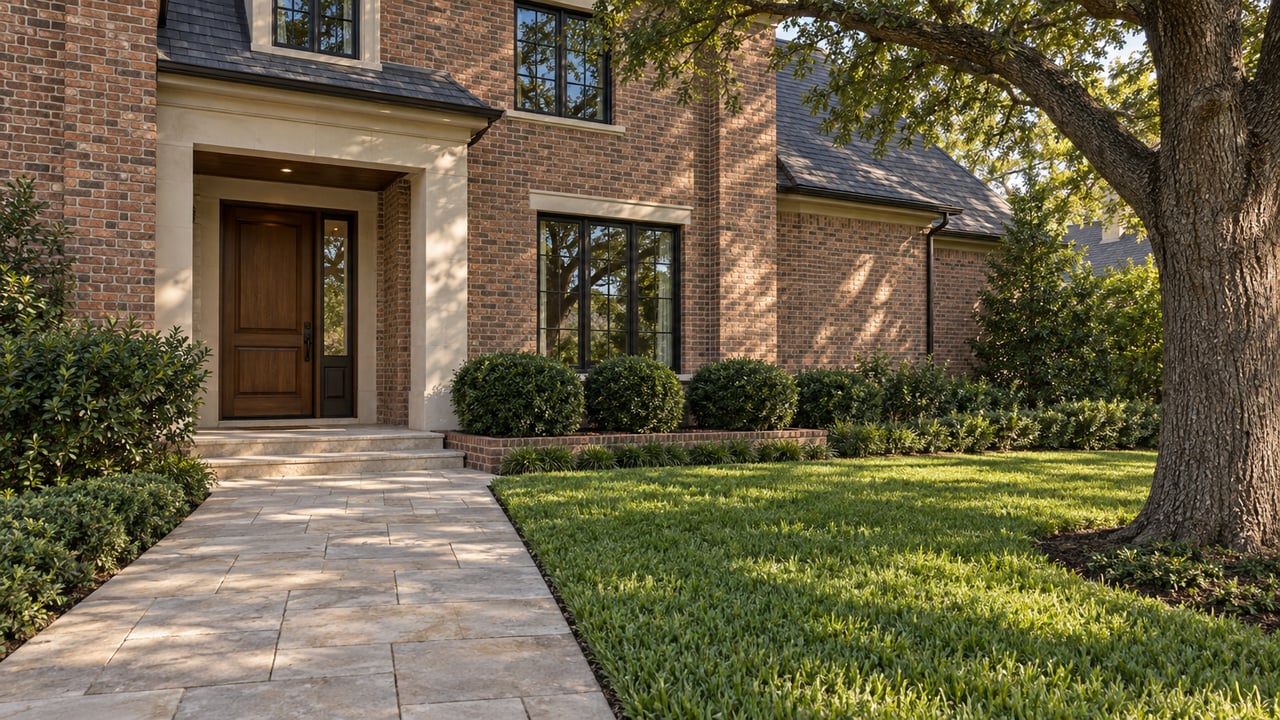
Two 1950s ranch houses sit a few blocks apart in Bellaire's 77401 zip code. Same era, same brick, roughly the same 2,200 square feet under roof. A buyer touring both on a Saturday would guess they're worth close to the same amount. The county disagrees, and the reason has nothing to do with either house's kitchen or roofline.
Pull the Harris County Appraisal District record for each property and a different number surfaces: how much of the total appraised value comes from the land, and how much comes from the structure sitting on it. That ratio, more than square footage or finish level, is what actually decides whether a Bellaire property is a renovation candidate or a lot purchase with a house attached. Most buyers never look for it before they make an offer.
The Ratio Every Appraisal Record Is Quietly Answering
The math is simple once you know to run it. Divide the land value on the HCAD record by the total appraised value. A property where land accounts for 80 percent of the total, say $480,000 of land against $600,000 total, is telling you the structure itself is only contributing $120,000 of value to a lot capable of supporting a new build worth $1.7 million. That gap between what the house contributes and what the lot can support is the signal. When it's wide, the house is a placeholder. When land and improvements are closer to even, the existing structure still carries real value and a renovation can pencil out.
This is why two houses that look nearly identical from the street can be pricing in completely different futures. One owner's improvements have kept pace with what the lot can support. The other's haven't, and the market has already started pricing the home as a teardown regardless of what condition it's in.
You can pull this record yourself directly from HCAD's public property search, and it takes less time than a single showing.
Why the Ceiling Kills Even a Well-Done Renovation
Bellaire's median home price sat near $1.2 million as of mid-2026, but that number obscures the more useful one: what new construction is actually selling for right now. Custom builders in 77401 are currently listing finished homes between roughly $1.6 million and $2.4 million. Builder conversations this summer put finished custom construction at $250 to $400 per square foot, meaning a 4,000 square foot build runs $1,000,000 to $1,600,000 in hard construction costs before land, soft costs, and financing. Add a typical $400,000 to $550,000 Bellaire lot and the all-in cost before builder profit lands between $1.4 million and just over $2.1 million.
A full gut renovation, by comparison, currently runs $100 to $215 per square foot. On a 2,200 square foot ranch, that's $220,000 to roughly $473,000 in renovation spend. On paper, that math looks far more affordable than a teardown. The problem shows up at resale. New construction sets the ceiling for the entire block, and a renovated home cannot sell above what a buyer could get by purchasing a comparable new build next door. Spend enough on a renovation and you cross a threshold where the market simply will not pay you back for it, no matter how well the work was done. The renovation only makes financial sense when the all-in cost, purchase price plus renovation, stays comfortably under that new-construction ceiling.
| Renovate | Tear Down and Rebuild | |
|---|---|---|
| Typical cost | $100–$215 per sq ft (full gut) | $250–$400 per sq ft (new construction) |
| Examples: 2,200 sq ft renovation; 4,000 sq ft rebuild | $220,000–$473,000 | $1.0M–$1.6M construction, plus $400K–$550K lot |
| What sets the price ceiling | Comparable new-construction sales nearby | The new build itself |
| Timeline | Varies by scope | 6–9 months demo to CO; 12–14 months contract to move-in |
The Rulebook Bellaire Runs on Its Own
Bellaire is an incorporated city inside the Houston metro, not a Houston neighborhood, and that distinction has real teeth. Houston famously has no zoning code and relies on private deed restrictions to control what gets built. Bellaire runs its own zoning ordinance, with minimum lot area requirements that range from 5,000 square feet in the R-4 and R-5 districts up to 14,000 square feet in R-1, along with its own setback, height, and lot coverage rules that a builder has to satisfy regardless of what a private deed restriction says. The city publishes its setback requirements directly, and any serious buyer evaluating a teardown lot should check it before assuming a floor plan will fit.
Here's the part that catches people off guard. The city's own Development Services department states plainly that it does not enforce deed restrictions. Zoning and private deed restrictions run on separate tracks in Bellaire, and if a subdivision has a covenant limiting lot splits or accessory structures, the city will not police it for you. It's a detail that's easy to miss when you're focused on the more visible zoning code and assume it covers everything.
According to Saadi Construction Group, a Bellaire teardown requires a demolition permit, an asbestos survey for any structure built before 1981, and tree disposition review for protected heritage trees.
The lot is the asset. Everything after closing, permitting, the builder contract, the construction loan, is really about protecting the value that's already sitting in the dirt.
Financing follows a different path too. Buyers who purchase a teardown lot with a standard mortgage and plan to arrange construction financing later are setting up a gap between two separate closings, with rate risk sitting in the middle of it. A one-time-close construction-to-permanent loan avoids that gap and locks a permanent rate before the first shovel goes in. Anyone running the numbers on a Bellaire rebuild should have this conversation with a lender before they write an offer on the lot, not after.
Who Is Actually Building in 77401 Right Now
The teardown-and-rebuild cycle in Bellaire is being carried out by a specific, active group of builders, not a generic contractor pool. Frankel Design Build, working out of Washington Avenue, typically takes on projects in the $2 million to $10 million range and serves buyers who want architectural distinction over a repeated floor plan. On Point Custom Homes, named the 2023 Houston Custom Builder of the Year, lists Bellaire alongside Briargrove, Tanglewood, and West University as a primary service area, with a focus on contemporary inner-loop rebuilds. Sandcastle Homes has worked Houston's inner loop since 1995, with a focus more on Heights and Spring Branch infill projects than on Bellaire.
New-construction listings and a 2025 listing put real numbers behind the trend: Lovett Homes at $2,199,900 for 5,662 square feet on Avenue B, Khalisi Custom Homes at $1,874,000 for 4,502 square feet, Kem Homes at $1,599,900 for 4,714 square feet, CSC Luxury Homes at $2,095,000 for 5,013 square feet, and RedBrick Builders listing 4,293 square feet at $1,639,000 in 2025. These examples show the price range that any renovation has to compete against.
What Twelve to Fourteen Months Really Looks Like
Assuming permits move through without a major plan revision, a Bellaire teardown typically runs six to nine months from demolition to certificate of occupancy: two to four weeks for demolition and site work, two to three months for framing and rough systems, then three to four months for insulation, drywall, finishes, and inspections. Homes over 5,000 square feet or with more complex plans add two to three more months. Buyers building to move in on a set timeline should plan for 12 to 14 months from the day they sign a contract on the lot, not from the day construction actually starts.
That timeline matters as much as the budget when you're comparing a renovation to a rebuild. A renovation on an occupied timeline can sometimes be completed in a fraction of that window. A full rebuild is a year-plus commitment before you're at the ribbon-cutting point, and any financing, schooling, or relocation plans need to be built around that reality rather than around a builder's optimistic estimate.
What This Means If You're Weighing a Bellaire Lot
The house you're touring in Bellaire is rarely the thing you're actually buying. Run the land-value ratio on the HCAD record before you fall in love with a kitchen renovation that the market will never pay back. Check the city's zoning code separately from any deed restriction on the property, because Bellaire will enforce one and not the other. And build your timeline and financing plan around a year or more, not a few months, if a teardown is genuinely the right call for the lot in front of you.
None of this replaces a walk-through with someone who has run these numbers before on a specific street and a specific lot. If you're weighing whether a Bellaire property in front of you is a renovation or a rebuild, Austin Oztan can help you read the record correctly before you write the offer. Schedule a Consultation to go through the numbers together.
This article is general information, not legal, tax or financial advice. Consult a qualified professional about your situation.